Underground car park towing in Auckland: what to send
Car stuck in an underground Auckland car park? Send the entrance height, level, access route and vehicle condition before towing is arranged.
If your car will not move inside an underground or multi-storey car park in Auckland, the first question is not simply whether a tow truck can fit. The towing operator needs the exact entrance, posted height, level or bay, route to the vehicle, vehicle condition and building access arrangements. Drive1 provides breakdown recovery in Auckland car parks, but each confined site must be assessed before a collection plan can be confirmed.
This guide is for a vehicle that is still on site and under your control. It does not cover removing somebody else’s parked vehicle.
Pin down the vehicle location
An underground GPS pin may show the building but not the entrance a recovery vehicle needs. Start with the complete location:
- Building or car park name
- Street address and the vehicle entrance used to drive in
- Level, zone, row and bay number
- Nearest lift, stairwell, payment machine or numbered pillar
- Whether the car faces into or out of the bay
- A phone number for someone who can meet the operator at street level
If the property has separate pedestrian and vehicle entrances, send a photo of the vehicle entrance. A map pin plus a short message such as “enter from the service lane off Smith Street” is more useful than the building address alone.
Record every height and access restriction
Photograph the posted clearance sign at the entrance. Then inspect the entire path between the entrance and the car. A second gate, hanging sign, pipe, beam or ramp may create another restriction, so include anything that looks lower or tighter than the main entrance.
Also show or describe:
- The ramp direction and whether vehicles can pass each other
- Tight corners, pillars and narrow lanes
- Speed humps or sharp changes in slope
- Security shutters, ticket barriers and swipe-card gates
- Parked vehicles that limit turning or loading space
- The route back out of the building
Do not estimate the clearance. Photograph the sign and enough of the entrance to show where it applies. A passenger car fitting through the entrance does not confirm that a recovery vehicle can reach, line up with and leave the vehicle’s position. Those details need to be reviewed before Drive1 confirms the job.
Describe the car as it is now
The operator needs to know whether the vehicle can be moved within the car park, not only why it stopped. Send:
- Make, model, year and registration plate
- Whether the engine or drive system starts
- Whether the transmission can select neutral
- Whether all wheels roll and the steering turns
- Whether the brakes and handbrake release
- Any flat tyre, damaged wheel, accident damage or visible fluid leak
- Whether the vehicle is electric, lowered, modified or unusually low
- Whether a working key is available
Do not force a damaged vehicle to move just to improve the answer. Describe what you already know and send close photos of any wheel, tyre or body damage. For an EV, lowered car or vehicle with special transport instructions, check the owner’s manual and read our Auckland flatbed towing guide before making assumptions about how it should be moved.
Arrange the gate, key and destination
Confirm who can open the entrance, meet the operator and authorise access. If a building manager, security desk or car park operator controls the gate, contact them before the booking. Share any access hours, ticket process, loading-zone rules or vehicle-entry instructions they give you.
The destination also needs to be ready. If the car is going to a workshop, confirm that it can accept the vehicle and note its opening hours. If the owner will not be present, agree in advance who holds the key and who can release and receive the car.
Send one clear message before dispatch
You can copy this checklist into the Drive1 quote form:
- Building name and street address
- Exact vehicle entrance
- Posted entrance height
- Level, zone and bay
- Photos of the entrance, ramps, tight turns and car position
- Make, model, year and plate
- Starts: yes / no / unknown
- Selects neutral: yes / no / unknown
- Rolls, steers and brakes: yes / no / unknown
- Flat tyre, damage, leak, EV, lowered or modified: details
- Working key and gate access: available / not available
- Delivery address and receiving contact
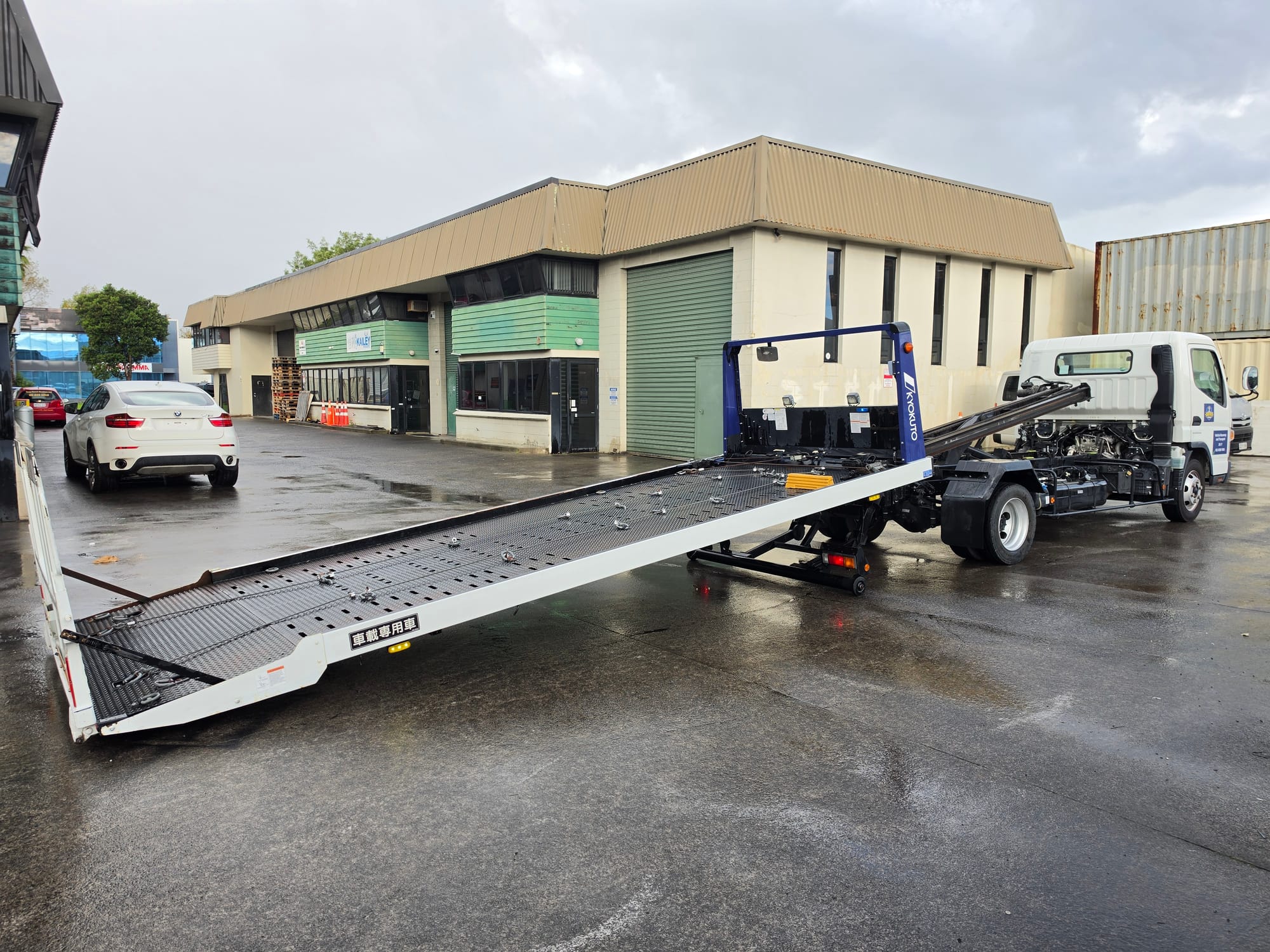
Drive1 uses quote-based pricing because distance, vehicle type, condition, access and timing vary between jobs. Complete information helps the operator decide whether the current flatbed suits the site, what else must be arranged and whether the collection can be confirmed. If the vehicle is stranded now and the situation is urgent, call 021 0289 7845 and send the photos while you speak with the operator.
For a planned pickup that is not confined to a car park, use the broader Auckland vehicle transport pickup checklist. If the vehicle is no longer where you parked it and may already have been towed, follow Auckland Transport’s recover a towed vehicle guidance instead.
24/7 towing across Greater Auckland.
Direct dispatch from Wairau Valley. Lie-flat flatbed for low and prestige vehicles. English & 中文.
- Vehicle Transport
Auckland vehicle transport pickup checklist
Booking vehicle transport in Auckland? Prepare the route, access, keys and vehicle details needed for a clearer quote and a smoother pickup.
- Accident Towing
Accident towing in Auckland: what happens after a crash
Just had a crash in Auckland? The legal must-dos, who tows your car, where it should go, and how to keep control of costs, from a local accident towing crew.
- Flatbed Towing
Auckland flatbed towing: when should you ask?
Not every tow needs a flatbed. Learn when to ask about one, what vehicle details to share, and how Drive1 plans flatbed towing in Auckland.